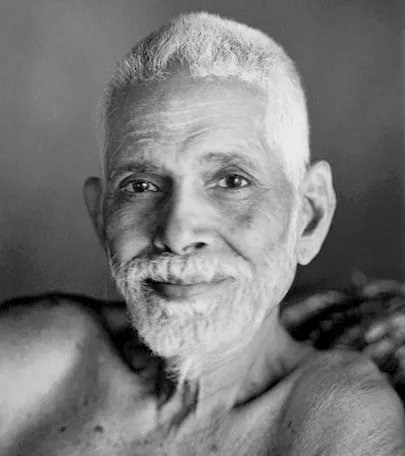
The Profound Depths of Silence
Ramana Maharshi's assertion that "Silence is the true teaching. It is the perfect teaching. It is suited only for the most advanced seeker" invites us to contemplate the profound nature of silence as a vehicle for spiritual awakening. In a world saturated with noise and distraction, this statement challenges us to reconsider our understanding of teaching and learning. Silence, in this context, transcends mere absence of sound; it becomes a transformative space where deeper truths can be revealed and understood.
This quote suggests that the essence of true wisdom lies not in the spoken word but in the stillness that allows for introspection and realization. For the advanced seeker, silence is not just a passive state but an active engagement with the self and the universe. It beckons us to explore the depths of our consciousness, where the noise of the mind can be quieted, and the heart can resonate with the profound truths of existence.
The image / the metaphor
In Maharshi's words, silence is depicted as a living entity, a teacher in its own right. The choice of the word "true" implies authenticity, suggesting that silence holds a purity that spoken language often cannot convey. The term "perfect teaching" elevates silence to a status that is both revered and elusive, hinting at the idea that the most profound insights often arise in moments of quietude. This imagery evokes a sense of sacredness, inviting seekers to approach silence not merely as a lack of sound but as a rich, fertile ground for spiritual growth.
Diving deeper into the metaphor, silence can be seen as a mirror reflecting our innermost thoughts and feelings. It is in this stillness that we confront our fears, desires, and the myriad distractions that cloud our perception. The act of embracing silence becomes a transformative journey, where the seeker learns to listen not only to the external world but to the subtle whispers of the soul. In this way, silence becomes a gateway to awakening, a space where the seeker can encounter the essence of their being.
In the speaker's tradition
Ramana Maharshi's teachings are deeply rooted in the non-dual tradition, which emphasizes the interconnectedness of all existence. Concepts such as *advaita* (non-duality) and *prajna* (wisdom) resonate with the idea that true understanding transcends dualistic thinking. In this framework, silence is not merely the absence of sound but a profound state of awareness that allows one to experience the unity of all things. This aligns with the notion of *sunyata* (emptiness) in Buddhist philosophy, where the realization of emptiness leads to liberation from suffering.
In his work, Maharshi often referenced the importance of self-inquiry, a practice that encourages individuals to turn their attention inward and question the nature of the self. This practice echoes the teachings found in the *Upanishads*, where the quest for knowledge is ultimately a journey into the depths of one's own consciousness. The silence that Maharshi speaks of is the fertile ground from which this self-inquiry can flourish, leading to profound insights and a deeper understanding of one's true nature.
Living the teaching
Consider a modern scenario where the chaos of daily life threatens to overwhelm us—perhaps during a hectic workday filled with meetings and deadlines. In such moments, the practice of embracing silence can serve as a refuge. Taking a few minutes to step away from the noise, close one's eyes, and breathe deeply can create a space for clarity and calm. This intentional silence allows the mind to settle, enabling us to approach our tasks with renewed focus and a sense of purpose.
A reflection
As we contemplate Maharshi's profound statement on silence, we are invited to reflect on our own relationship with stillness. How often do we allow ourselves the space to be silent, to listen deeply to our inner selves? In a world that often equates busyness with productivity, the challenge lies in recognizing the value of silence as a teacher. What insights might emerge if we dedicated time each day to embrace the quiet, to explore the depths of our own consciousness?


