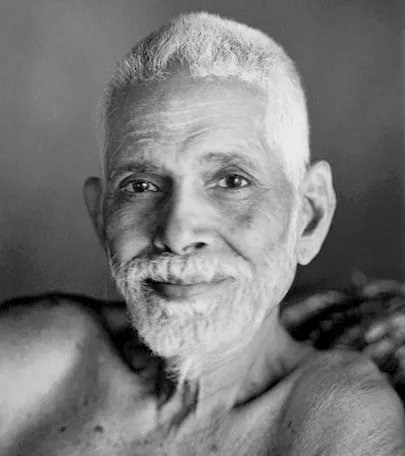
The Depth of Inquiry: Unraveling the Self
Ramana Maharshi's assertion that "Repetition of the question 'Who am I?' is mere mantra. Inquiry is to seek the source of the thought" invites us to delve beyond superficial practices into the profound depths of self-inquiry. This distinction is crucial; it emphasizes that simply repeating a question does not lead to understanding or transformation. Instead, true inquiry demands a deeper exploration of the origins of our thoughts and identities, challenging us to confront the essence of our being.
This exploration is not merely an intellectual exercise but a vital spiritual practice. In a world where distractions abound and identities are often constructed from external validations, the call to seek the source of our thoughts becomes a radical act of self-liberation. It urges us to peel back the layers of conditioning, societal expectations, and habitual responses, revealing the authentic self that lies beneath. The stakes are high; in understanding who we truly are, we can cultivate a life of authenticity, purpose, and connection.
The image / the metaphor
At first glance, the imagery in Maharshi's quote may seem straightforward, yet it is rich with layers of meaning. The phrase "mere mantra" suggests a repetitive, mechanical practice devoid of depth, while "inquiry" evokes a sense of active engagement and exploration. The verbs chosen—repetition versus seeking—highlight a fundamental difference between passive recitation and active investigation. This distinction invites us to consider how we approach our spiritual practices: are we merely going through the motions, or are we genuinely seeking to understand the nature of our existence?
Diving deeper into the metaphor, we can see that the act of inquiry is akin to a journey into the heart of a labyrinth, where each turn and twist leads us closer to the center—the source of our thoughts. This journey requires courage and commitment, as it often involves confronting uncomfortable truths about ourselves. The metaphor of seeking the source suggests a return to a primordial state of awareness, where we can encounter our true nature, unencumbered by the constructs of the mind. It is an invitation to embark on a path that transcends mere intellectual understanding, leading us toward a profound realization of self.
In the speaker's tradition
Ramana Maharshi's teachings are deeply rooted in the Advaita Vedanta tradition, which emphasizes non-duality and the unity of the self with the ultimate reality, Brahman. Concepts such as dharma, the moral order of the universe, and prajna, or wisdom, play significant roles in this tradition. Maharshi's approach to self-inquiry aligns with the practice of kenosis, or self-emptying, where one relinquishes the ego to discover the true self. This process is not merely philosophical; it is a lived experience that transforms one's understanding of existence and interconnectedness.
In the context of Hindu texts, the Upanishads offer profound insights into the nature of the self and the inquiry into "Who am I?" For instance, the Chandogya Upanishad speaks of the essence of the self as "Tat Tvam Asi" or "That Thou Art," suggesting an inherent unity between the individual and the universal. Maharshi's emphasis on seeking the source of thought resonates with this ancient wisdom, inviting practitioners to engage in a transformative journey that leads to the realization of their true nature as part of the cosmic whole.
Living the teaching
Consider a modern scenario where an individual grapples with feelings of inadequacy in their career. They may find themselves repeating affirmations or mantras to boost their self-esteem, yet these practices often feel hollow and ineffective. In this context, Maharshi's teaching encourages them to pause and inquire: "What is the source of these feelings of inadequacy?" This inquiry might lead them to uncover deeply rooted beliefs formed in childhood or societal pressures that dictate their worth. By seeking the source, they can begin to dismantle these beliefs and cultivate a more authentic sense of self.
In relationships, this teaching can manifest as a powerful tool for deeper connection. Imagine a couple facing recurring conflicts, each partner entrenched in their perspectives. Instead of merely repeating grievances, they can engage in self-inquiry: "What thoughts or fears are driving my reactions?" This practice fosters empathy and understanding, allowing them to explore the underlying emotions that fuel their disagreements. By seeking the source of their thoughts, they can transform their interactions from reactive patterns into opportunities for growth and deeper intimacy.
A reflection
As we contemplate Maharshi's profound words, we are invited to reflect on our own practices of self-inquiry. Are we merely repeating questions, or are we courageously seeking the source of our thoughts and beliefs? In this moment of reflection, consider: What thoughts or identities have you accepted without question, and how might you begin to explore their origins? This inquiry holds the potential to illuminate the path toward a more authentic and liberated self.


