The Essence of Being: Unraveling the Self
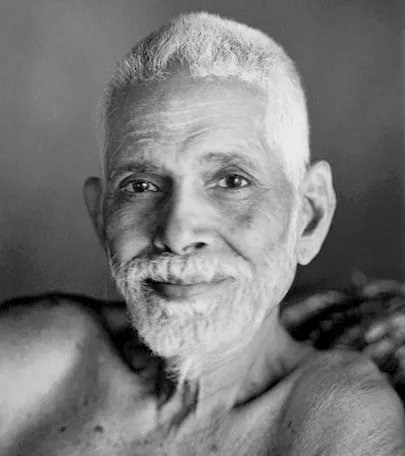
In the profound words of Ramana Maharshi, "Self alone is, and the Self alone is real." This statement invites us to explore the nature of our existence and the essence of reality itself. At its core, Maharshi's assertion challenges the myriad distractions of the external world, urging us to turn inward and recognize the singular truth of our being. In a society often preoccupied with materialism and superficial identities, understanding this quote becomes a vital endeavor for those seeking deeper meaning and authenticity in their lives.
To grasp the weight of Maharshi's words, we must first consider the implications of the term "Self." This is not merely a reference to the ego or the individual personality, but rather an invitation to recognize the universal consciousness that connects all beings. The journey toward understanding this Self is not just an intellectual exercise; it is a transformative process that can lead to profound peace and liberation. In a world rife with conflict and division, the realization of our shared essence holds the potential to heal both ourselves and our relationships with others.
The image / the metaphor
At first glance, the quote presents a stark dichotomy: the Self is posited as the only reality, while everything else may be seen as ephemeral or illusory. The choice of the word "alone" emphasizes the singularity and uniqueness of the Self, suggesting that all external phenomena are transient and ultimately secondary to this deeper truth. The imagery evokes a sense of solitude, yet it is a solitude that is rich with potential for connection and understanding. It invites us to delve into the depths of our being, where we may discover a reality that transcends the chaos of the material world.
Delving deeper into the metaphor, we can see that Maharshi's statement serves as a lighthouse guiding us through the fog of our conditioned perceptions. The Self, in this context, is akin to the ocean, vast and unchanging, while our thoughts, emotions, and experiences are like waves that rise and fall upon its surface. By recognizing that these waves are not the essence of who we are, we can cultivate a sense of detachment from the fluctuations of life, allowing us to navigate our existence with greater equanimity and clarity.
In the speaker's tradition
Ramana Maharshi's teachings are deeply rooted in the Advaita Vedanta tradition, which emphasizes non-duality and the oneness of existence. Concepts such as *dharma* (righteousness), *kenosis* (self-emptying), and *sunyata* (emptiness) resonate with his assertion that the Self is the only reality. In this framework, the realization of the Self leads to liberation (*moksha*), as one transcends the illusion of separateness and recognizes their inherent unity with all that is. This understanding is not merely philosophical; it is a lived experience that transforms one's perception of reality.
In the *Upanishads*, ancient texts that form the philosophical backbone of Hindu thought, we find echoes of Maharshi's insights. The *Chandogya Upanishad* speaks of the ultimate reality as *Brahman*, the unchanging essence that underlies the ever-changing world. The famous phrase "Tat Tvam Asi," meaning "That Thou Art," encapsulates the essence of non-duality, affirming that the individual self is not separate from the universal Self. This profound realization is what Maharshi invites us to explore, urging us to look beyond the surface and recognize the deeper truth of our existence.
Living the teaching
Consider a modern scenario where this teaching can be applied: a person grappling with the pressures of work and societal expectations. In the hustle of daily life, it is easy to become enmeshed in the roles we play, identifying ourselves solely through our jobs, relationships, or achievements. However, by reflecting on Maharshi's assertion, one might begin to disentangle their sense of self from these external markers. This shift in perspective can lead to a more profound sense of peace, as the individual recognizes that their true essence is not defined by their circumstances but by the unchanging Self that resides within.
In the realm of relationships, the realization that "Self alone is, and the Self alone is real" can foster deeper connections. When we understand that our true identity transcends the ego, we can approach our interactions with greater compassion and empathy. For instance, during a conflict with a loved one, instead of reacting from a place of hurt or defensiveness, we can pause and remember that beneath the surface, both parties share the same essence. This awareness can transform the dynamics of the relationship, allowing for healing and understanding to flourish.
A reflection
As we contemplate the depth of Ramana Maharshi's words, we are invited to ask ourselves: What does it mean to recognize the Self as the only reality in my life? This question encourages us to explore the layers of our identity, peeling back the distractions and illusions that often cloud our perception. In this inquiry, we may find not only clarity but also a profound sense of connection to the world around us, as we embrace the truth of our shared existence.


