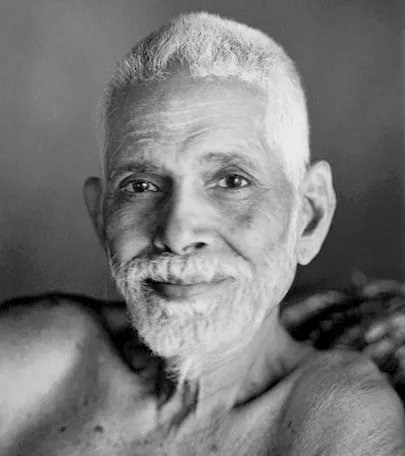
The Serenity Within: Embracing Solitude in a Crowded World
Ramana Maharshi's assertion that "solitude is in the mind of man" invites us to reconsider our understanding of solitude and peace. He suggests that true serenity does not depend on our external circumstances but rather on our internal state of being. This perspective is particularly significant in our fast-paced, interconnected world, where the noise of daily life often drowns out our inner voice. Maharshi's wisdom encourages us to cultivate a tranquil mind, regardless of our surroundings, highlighting the profound relationship between solitude and mental clarity.
In a society that often equates solitude with loneliness, Maharshi's insights challenge us to redefine our relationship with ourselves. The idea that one can be surrounded by the hustle and bustle of life yet maintain a peaceful mind is a powerful reminder of the strength found within. This teaching not only offers solace to those who feel overwhelmed but also serves as a guide for anyone seeking deeper self-awareness. By exploring the nature of solitude as a mental state, we can unlock the potential for inner peace that exists within each of us.
The image / the metaphor
At the heart of Maharshi's quote lies a vivid image: the contrast between the external world and the internal mind. The phrase "in the thick of the world" evokes a sense of chaos and distraction, while "perfect serenity of mind" paints a picture of calmness and clarity. The verbs chosen—"maintain" and "perfect"—suggest an active engagement with one's mental state, implying that serenity is not a passive experience but a conscious choice. This imagery invites us to visualize the possibility of finding stillness amidst the storm of life.
Diving deeper into the metaphor, we can see that solitude is not merely the absence of others but a state of being that can be cultivated regardless of external conditions. Maharshi's words remind us that our perception of solitude is shaped by our thoughts and attitudes. Just as a still pond reflects the sky above, our minds can reflect peace when we learn to quiet the turbulence within. This understanding encourages us to explore the depths of our consciousness, revealing that solitude can be a source of strength and clarity rather than a void to be feared.
In the speaker's tradition
Ramana Maharshi's teachings are deeply rooted in the Hindu tradition, particularly in the concepts of self-inquiry and the nature of the mind. His emphasis on solitude as a mental state aligns with the idea of *dharma*, or the path of righteousness, which encourages individuals to seek inner truth. The practice of *kenosis*, or self-emptying, resonates with Maharshi's call to let go of external distractions and turn inward. This journey towards self-realization is akin to the Buddhist concept of *sunyata*, or emptiness, where one discovers that true peace arises from within.
In his seminal work, *Talks with Sri Ramana Maharshi*, he often refers to the importance of self-inquiry as a means to understand the nature of the mind and its relationship to solitude. This aligns with the teachings found in the *Bhagavad Gita*, where Lord Krishna advises Arjuna to find peace through detachment from the fruits of action. Both texts emphasize that the path to serenity lies not in external circumstances but in the cultivation of a tranquil mind, reinforcing Maharshi's assertion that solitude is a mental construct.
Living the teaching
Consider a modern scenario where the demands of work and family life create a cacophony of responsibilities. In such moments, it is easy to feel overwhelmed and disconnected from oneself. Maharshi's teaching offers a pathway to navigate this chaos by encouraging individuals to carve out moments of stillness, even amidst the busiest days. By practicing mindfulness or engaging in brief periods of meditation, one can cultivate a sense of solitude that allows for reflection and clarity, transforming the experience of being 'in the thick of the world' into an opportunity for inner peace.
In relationships, this teaching can be particularly transformative. Imagine a situation where conflict arises, and emotions run high. By embracing the idea that solitude is a state of mind, one can step back and create mental space to respond thoughtfully rather than react impulsively. This practice of maintaining serenity within oneself can lead to more constructive dialogues and deeper connections, illustrating how Maharshi's insights can be applied to enhance our interactions with others and foster a sense of peace in our daily lives.
A reflection
As we contemplate Maharshi's profound assertion, we are invited to explore the nature of our own minds. How often do we allow external circumstances to dictate our inner peace? In moments of solitude, whether chosen or imposed, we can ask ourselves: What does it mean to cultivate serenity within, regardless of the noise around us? This question encourages us to engage in a deeper exploration of our inner landscape, guiding us toward a more profound understanding of solitude and its transformative potential.


