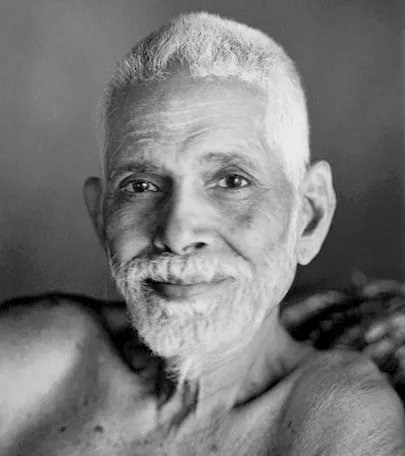
The Essence of Being: A Journey into Self-Realization
Ramana Maharshi's assertion that "the state we call realization is simply being oneself, not knowing anything or becoming anything" invites us to explore the profound simplicity of existence. In a world often driven by ambition and the pursuit of knowledge, this statement challenges us to reconsider our understanding of self and fulfillment. It suggests that true realization is not found in external achievements or intellectual pursuits but in the quiet acceptance of our own being. This perspective is not merely philosophical; it holds the potential to transform our daily lives and relationships.
To grasp the depth of Maharshi's insight, we must delve into the nature of realization itself. It is a state of being that transcends the complexities of thought and the incessant desire for more. In this light, realization becomes an invitation to return to our essence, to embrace the simplicity of existence without the burdens of expectation or the weight of knowledge. This understanding is crucial, as it points to a path of liberation from the incessant striving that characterizes much of modern life.
The image / the metaphor
The imagery in Maharshi's quote evokes a sense of stillness and clarity. The verbs "being" and "not knowing" suggest a state of presence that is free from the clutter of thought and ambition. This contrasts sharply with our usual experience, where we often equate self-worth with knowledge and achievement. The metaphor of realization as "being oneself" paints a picture of authenticity, where the essence of who we are is revealed in its purest form, untainted by external influences or societal expectations.
Diving deeper into this metaphor, we can see that "not knowing anything or becoming anything" speaks to the relinquishing of the ego's grasp on our identity. It invites us to let go of the narratives we construct around ourselves—those stories of success, failure, and the relentless pursuit of becoming someone different. In this space of surrender, we find a profound freedom, a liberation that allows us to simply exist as we are, without the need for validation or transformation.
In the speaker's tradition
Ramana Maharshi's teachings are deeply rooted in the Hindu tradition, particularly in the concepts of self-inquiry and the nature of the Atman, or true self. His emphasis on realization as being oneself aligns with the idea of dharma, which encourages individuals to live in accordance with their true nature. This perspective resonates with the notion of kenosis, or self-emptying, found in various spiritual traditions, where the relinquishing of the self leads to a deeper connection with the divine.
Moreover, Maharshi's insights can be compared to the Buddhist concept of sunyata, or emptiness, which suggests that the realization of one's true nature involves seeing beyond the illusions of the self. In texts such as the Upanishads, the exploration of the self leads to the understanding that the individual soul (Atman) is ultimately one with the universal consciousness (Brahman). This profound unity underscores the essence of Maharshi's teaching: that realization is not an attainment but a return to our inherent state of being.
Living the teaching
Consider a modern scenario where the pressures of work and societal expectations weigh heavily on an individual. In the relentless pursuit of success, one might find themselves caught in a cycle of stress and dissatisfaction, constantly striving to achieve more. Maharshi's teaching offers a radical shift in perspective: instead of seeking validation through accomplishments, one can practice simply being present in each moment. This could mean taking a step back to breathe, to acknowledge one's feelings without judgment, and to embrace the inherent worth of simply existing.
A reflection
As we contemplate Maharshi's profound statement, we are invited to reflect on our own lives: What does it mean to simply be oneself in a world that often demands more? In what ways do we find ourselves caught in the cycle of knowing and becoming, rather than embracing the simplicity of our existence? This inquiry can lead us to a deeper understanding of our true nature and the liberation that comes from accepting ourselves as we are, free from the burdens of expectation and the illusions of the ego.


