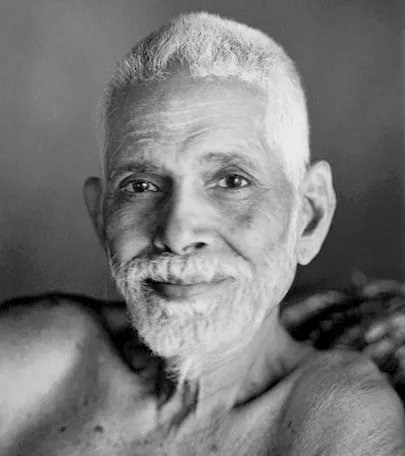
The Timeless Now: Embracing Presence in the Teachings of Ramana Maharshi
Ramana Maharshi's assertion that "There is neither past nor future. There is only the present" invites us to reconsider our relationship with time. In a world often dominated by memories of what has been and anxieties about what is yet to come, this statement serves as a profound reminder of the significance of the present moment. It challenges us to cultivate awareness and presence, suggesting that true existence is found not in the fleeting shadows of yesterday or the uncertain promises of tomorrow, but in the vibrant immediacy of now.
This teaching resonates deeply within the context of spiritual awakening. By focusing on the present, we are encouraged to shed the burdens of regret and anticipation, allowing ourselves to fully engage with life as it unfolds. This perspective not only liberates us from the shackles of time but also opens the door to a deeper understanding of our true nature. In this exploration, we find that presence is not merely a state of being; it is a gateway to profound insight and connection with the essence of life itself.
The image / the metaphor
At its core, Maharshi's quote evokes a powerful imagery of time as a linear construct that often confines our experience. The verbs "is" and "are" emphasize the immediacy of the present, suggesting a state of being that transcends the limitations of past and future. This imagery invites us to visualize time not as a rigid timeline but as a flowing river, where the only point of access is the current moment. The present is depicted as a vibrant, living entity, rich with potential and possibility.
Diving deeper into this metaphor, we can see that the present moment is akin to a canvas upon which the colors of our experiences are painted. Each moment is an opportunity to engage with life authentically, to respond to our surroundings with awareness and intention. In this light, the past and future become mere echoes, while the present stands as a dynamic space for creation and transformation. This understanding encourages us to embrace each moment fully, recognizing it as a sacred opportunity for growth and connection.
In the speaker's tradition
Ramana Maharshi's teachings are deeply rooted in the Advaita Vedanta tradition, which emphasizes the non-duality of existence. Concepts such as *dharma* (righteous duty) and *bhakti* (devotion) intertwine with his message, suggesting that living in the present is not only a personal journey but also a collective responsibility. The notion of *sunyata* (emptiness) further complements this teaching, as it invites us to recognize the illusory nature of time and the self, urging us to dissolve our attachments to past and future narratives.
In the *Upanishads*, a foundational text of Hindu philosophy, we find echoes of Maharshi's insights. The *Isha Upanishad* speaks of the eternal presence of the divine, urging seekers to dwell in the present and recognize the unity of all existence. This alignment with the eternal now is a recurring theme in spiritual literature, reinforcing the idea that true wisdom lies in the realization of our interconnectedness and the impermanence of time.
Living the teaching
Consider a modern scenario where this teaching can be applied: a busy professional caught in the whirlwind of deadlines and expectations. In such a context, the relentless focus on future goals can lead to stress and burnout. By embracing Maharshi's teaching, this individual can learn to pause, breathe, and redirect their attention to the present moment. This shift not only alleviates anxiety but also enhances productivity and creativity, allowing for a more fulfilling engagement with their work.
In the realm of relationships, the application of this teaching can be equally transformative. Imagine a couple navigating a challenging phase in their partnership, often dwelling on past grievances or worrying about future uncertainties. By consciously choosing to be present with one another, they can cultivate deeper understanding and compassion. This practice of presence fosters genuine connection, enabling them to address issues with clarity and love rather than being clouded by the weight of time.
A reflection
As we contemplate Ramana Maharshi's profound assertion, we are invited to explore our own relationship with time. How often do we find ourselves lost in the echoes of the past or the shadows of the future? In what ways can we cultivate a deeper awareness of the present moment in our daily lives? Reflecting on these questions can guide us toward a more authentic existence, rooted in the richness of now.


