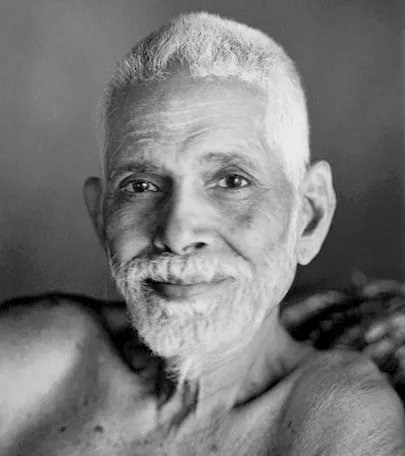
Awakening to the Self: The Timeless Presence Within
Ramana Maharshi's assertion that "There is no need to study books and traditions to know the Self. The Self is here and now and is always known to oneself" invites us to reconsider the nature of self-awareness and spiritual understanding. In a world often dominated by external validation and intellectual pursuits, this quote emphasizes the immediacy of self-knowledge, suggesting that the essence of who we are is not hidden in texts or rituals but is accessible in the present moment. This perspective challenges the conventional wisdom that equates spiritual growth with scholarly study, urging us instead to turn inward.
By asserting that the Self is always known to oneself, Maharshi points to an intrinsic awareness that exists beyond the layers of thought and conditioning. This awareness is not a distant goal to be achieved through rigorous study or adherence to tradition; rather, it is a fundamental aspect of our being that is perpetually available. The significance of this teaching lies in its potential to liberate us from the confines of intellectualism and to encourage a direct, experiential engagement with our true nature.
The image / the metaphor
The imagery in Maharshi's quote evokes a sense of immediacy and presence. The phrase "here and now" suggests a grounding in the present moment, where the Self is not a distant concept but a living reality. The verbs "know" and "study" create a contrast between passive learning and active awareness. This distinction highlights that while books may offer insights, they cannot replace the direct experience of self-awareness that is available to us at any moment.
Diving deeper into the metaphor, we can see that the Self is likened to a constant light, illuminating our existence regardless of external circumstances. Just as one does not need to seek the sun to know it is shining, we do not need to search for the Self in external sources. This metaphor invites us to recognize that our true essence is not obscured but rather is the very foundation of our being, waiting to be acknowledged and embraced.
In the speaker's tradition
Ramana Maharshi's teachings are rooted in the Advaita Vedanta tradition, which emphasizes non-duality and the unity of the individual self (Atman) with the universal consciousness (Brahman). Concepts such as dharma and prajna resonate with his assertion that true knowledge of the Self transcends intellectual understanding. In this context, the idea of kenosis, or self-emptying, aligns with the notion that to truly know the Self, one must let go of preconceived notions and attachments to external validation.
In the context of Hindu texts, the Upanishads echo this sentiment, particularly in the famous declaration "Tat Tvam Asi," meaning "That Thou Art." This phrase encapsulates the essence of non-duality, affirming that the individual self is not separate from the universal reality. Maharshi's teaching serves as a contemporary reminder of this ancient wisdom, urging seekers to look within rather than relying solely on external teachings.
Living the teaching
Consider a modern scenario where an individual feels lost in the pursuit of happiness, constantly seeking fulfillment through achievements, relationships, or material possessions. In such a case, Maharshi's teaching serves as a gentle nudge to pause and reflect. Instead of chasing after external validation, one can turn inward, recognizing that the source of contentment lies not in external circumstances but in the acknowledgment of one's own inherent worth and presence.
In the realm of relationships, this teaching can be transformative. Imagine a moment of conflict where misunderstandings arise. Instead of reacting from a place of ego or defensiveness, one can practice self-awareness by recognizing the underlying self that connects us all. By grounding oneself in the understanding that the Self is always present, it becomes possible to approach the situation with compassion and clarity, fostering deeper connections and resolving conflicts with grace.
A reflection
As we contemplate Maharshi's profound insight, we are invited to ask ourselves: "What does it mean for me to know my true Self in this moment?" This question encourages a deep exploration of our inner landscape, prompting us to consider how often we seek validation outside ourselves rather than recognizing the timeless presence that resides within. In this inquiry, we may find the key to unlocking a more authentic and fulfilling existence.


