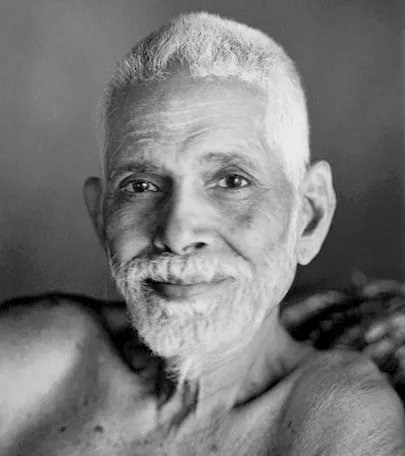
Awakening to the Silence of Being
In the words of Ramana Maharshi, "We are happy in deep sleep where there is no mind." This profound statement invites us to explore the nature of happiness and the role of the mind in our experience of reality. It suggests that true contentment lies beyond the incessant chatter of thoughts and the burdens of our mental constructs. In a world that often equates happiness with external achievements and mental activity, Maharshi's insight serves as a gentle reminder of the peace that resides in stillness.
Delving deeper, we find that this quote speaks to the essence of our being, a state of existence that transcends the limitations of thought. In deep sleep, we are liberated from the narratives and judgments that our minds create, allowing us to experience a profound sense of tranquility. This state of mindlessness is not merely an absence of thought; it is a return to our fundamental nature, where happiness is inherent and unconditioned. Understanding this can transform our approach to life, guiding us toward a more authentic experience of joy.
The image / the metaphor
At first glance, the imagery of deep sleep evokes a sense of comfort and refuge. In this state, the mind is quiet, and the burdens of daily life fade away. The choice of the word "happy" is particularly striking; it implies that this state of being is not just devoid of thought but is filled with a profound sense of well-being. The juxtaposition of happiness and the absence of mind challenges our conventional understanding of joy, which is often tied to mental engagement and external validation.
Going deeper into the metaphor, deep sleep can be seen as a gateway to understanding our true nature. It symbolizes a return to the source, a momentary dissolution of the ego and its incessant demands. In this silence, we encounter a space of pure awareness, untainted by the complexities of thought. Maharshi's words encourage us to recognize that this state is not merely a fleeting experience but a glimpse into the deeper reality of who we are, inviting us to cultivate this awareness in our waking lives.
In the speaker's tradition
Ramana Maharshi's teachings are deeply rooted in the Advaita Vedanta tradition, which emphasizes non-duality and the realization of the Self. Concepts such as "sunyata" (emptiness) and "kenosis" (self-emptying) resonate with the essence of his message. In Advaita, the mind is often viewed as a veil that obscures our true nature, and the practice of self-inquiry is a means to peel away these layers. Maharshi's assertion that happiness exists in the absence of mind aligns with the understanding that liberation comes from recognizing the illusory nature of our thoughts and identities.
In the Upanishads, we find echoes of this teaching, particularly in the exploration of "Atman" (the true Self) and its relationship to "Brahman" (the ultimate reality). The Chandogya Upanishad, for instance, speaks of the bliss of the Self, which is beyond the fluctuations of the mind. This ancient wisdom reinforces Maharshi's insight, suggesting that the happiness we seek is not found in external pursuits but in the realization of our inherent nature, which is unconditioned and eternal.
Living the teaching
Consider a modern scenario where the pressures of daily life weigh heavily on an individual. The constant demands of work, relationships, and societal expectations can create a cacophony of thoughts that lead to stress and anxiety. In such moments, Maharshi's teaching invites us to pause and reflect on the nature of our happiness. By recognizing that our true contentment lies beyond the noise of the mind, we can cultivate practices such as meditation or mindfulness that allow us to reconnect with that deep, silent space within.
In the context of relationships, this teaching can be transformative. When conflicts arise, it is often our thoughts and judgments that cloud our perception of the other person. By embracing the idea that happiness exists in the absence of mind, we can approach our interactions with greater compassion and understanding. Instead of reacting from a place of ego, we can cultivate a presence that honors the silence between thoughts, allowing for deeper connections and a more profound sense of love and acceptance.
A reflection
As we contemplate Maharshi's profound insight, we are invited to explore our own relationship with the mind and happiness. What would it mean for you to experience moments of joy that are not contingent upon your thoughts or external circumstances? In the stillness of your being, can you find a sense of peace that transcends the fluctuations of daily life? This question invites us to engage in a deeper inquiry into the nature of our happiness and the possibility of living from a place of inner stillness.


