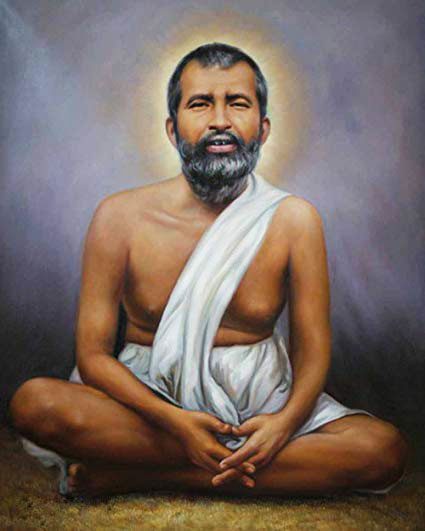
Following the World into the Forest
In the words of Sri Ramakrishna, "If you cannot live in the world without being attached, retire into the forest. But there too you will find the world following you." This profound statement invites us to reflect on the nature of attachment and the inescapable presence of the world in our lives. It suggests that no matter how far we retreat from external distractions, the internal struggles of attachment and desire remain. The stakes are high; understanding this dynamic can lead to deeper wisdom and a more authentic way of living.
Ramakrishna's insight serves as a reminder that the quest for peace and detachment is not merely about physical isolation but rather an inner journey. The forest symbolizes a place of solitude and contemplation, yet even in such a serene environment, the echoes of worldly attachments persist. This paradox challenges us to confront our own attachments, urging us to explore the depths of our consciousness and the nature of our desires. It is a call to engage with the world, not by escaping it, but by transforming our relationship with it.
The image / the metaphor
The imagery of the forest evokes a sense of tranquility and retreat, a space where one might hope to escape the chaos of daily life. The verbs chosen by Ramakrishna—"live," "retire," and "find"—suggest a journey that is both physical and metaphysical. To "retire into the forest" implies a deliberate choice to seek solitude, yet the phrase "the world following you" hints at the inescapable nature of our attachments. This duality captures the essence of human experience: the desire for peace juxtaposed with the persistent pull of worldly concerns.
Diving deeper into the metaphor, the forest can be seen as a representation of the inner landscape of the mind. Just as one may seek refuge in nature, we often attempt to find solace in isolation from our responsibilities and relationships. However, the realization that "the world follows you" serves as a poignant reminder that true liberation cannot be found in physical separation alone. Instead, it invites us to confront the internalized patterns of attachment that shape our perceptions and experiences, suggesting that the journey toward non-attachment is an inward one.
In the speaker's tradition
Within the context of Hindu philosophy, Ramakrishna's teaching resonates deeply with concepts such as dharma, the moral order of the universe, and bhakti, the path of devotion. The notion of non-attachment is intricately linked to the idea of kenosis, or self-emptying, where one relinquishes the ego and its desires in pursuit of a higher truth. This aligns with the Buddhist concept of sunyata, or emptiness, which emphasizes the transient nature of all things and the importance of letting go of attachments to achieve enlightenment.
Ramakrishna's insights can be further illuminated by referencing the Bhagavad Gita, where Lord Krishna advises Arjuna on the importance of performing one's duty without attachment to the fruits of action. This teaching underscores the idea that engagement with the world is essential, yet it must be approached with a sense of detachment. The Gita's emphasis on selfless action mirrors Ramakrishna's assertion that one cannot escape the world; rather, one must learn to navigate it with wisdom and grace.
Living the teaching
Consider a modern scenario where this teaching might resonate: an individual striving for success in their career may find themselves increasingly attached to their job title, salary, or recognition. In their pursuit of these external validations, they may experience stress, anxiety, and a sense of emptiness. By recognizing that their attachment to these outcomes is what causes their suffering, they can begin to shift their focus toward the intrinsic value of their work, fostering a sense of purpose that transcends material success.
This teaching can also be applied in personal relationships. Imagine a friendship that has become strained due to expectations and unmet needs. Instead of retreating from the relationship or harboring resentment, one can practice non-attachment by embracing the friendship for what it is, without clinging to an idealized version of it. This shift allows for a more authentic connection, where both individuals can grow and evolve without the burden of attachment weighing them down.
A reflection
As we contemplate Sri Ramakrishna's words, we are invited to ask ourselves: What attachments do I carry that prevent me from experiencing true freedom? This question encourages a deep exploration of our desires and the ways in which they shape our lives. By reflecting on our attachments, we can begin to understand the nature of our suffering and take steps toward a more liberated existence, one that honors both our inner journey and our engagement with the world.


