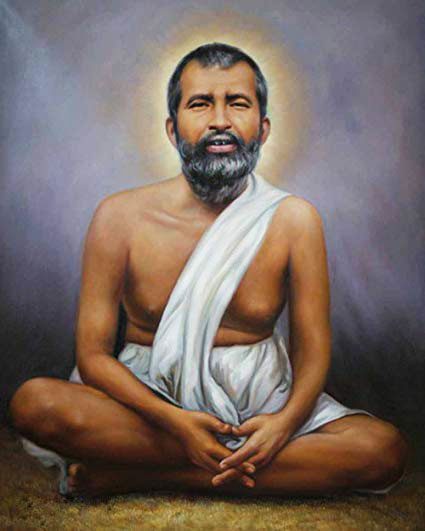
The Freedom of the Mind: A Journey Beyond Chains
Sri Ramakrishna's assertion that "It is the mind alone that determines whether a man is a slave or free" invites us to explore the profound relationship between our mental states and our experience of freedom. This statement suggests that external circumstances may not dictate our sense of liberation; rather, it is our internal landscape—the thoughts, beliefs, and perceptions we hold—that shapes our reality. Understanding this dynamic is crucial, as it empowers us to reclaim agency over our lives and navigate the complexities of existence with a sense of autonomy.
In a world often dominated by external pressures and societal expectations, the idea that our freedom is contingent upon our mental state becomes a beacon of hope. It challenges us to look inward, to examine the narratives we construct about ourselves and our circumstances. By recognizing that our minds can either imprison us or set us free, we are called to cultivate awareness and mindfulness, allowing us to transcend the limitations imposed by both ourselves and the world around us.
The image / the metaphor
The imagery in Ramakrishna's quote evokes a powerful dichotomy: the concepts of slavery and freedom are not merely physical states but are deeply rooted in the mind. The term "slave" conjures images of bondage, restriction, and a lack of agency, while "free" suggests liberation, choice, and the ability to navigate one's own path. The verbs "determines" and "is" emphasize the active role our minds play in shaping our experiences, suggesting that our thoughts are the architects of our reality.
Diving deeper into this metaphor, we can see that the mind acts as both jailer and liberator. It is the source of our fears, doubts, and insecurities, which can confine us in a prison of our own making. Yet, it is also the wellspring of creativity, insight, and resilience, offering pathways to liberation. This duality invites us to engage in a continuous dialogue with our thoughts, encouraging us to challenge limiting beliefs and embrace a more expansive understanding of ourselves.
In the speaker's tradition
Situated within the rich tapestry of Hindu philosophy, Ramakrishna's teaching resonates with concepts such as dharma, the moral order that guides our actions, and prajna, the wisdom that arises from deep understanding. The notion of freedom in this context is not merely the absence of external constraints but a profound realization of one's true nature, which is often obscured by ignorance and attachment. This aligns with the idea of kenosis, or self-emptying, where one relinquishes the ego to experience a deeper sense of unity with the divine.
Moreover, the teachings of the Bhagavad Gita echo this sentiment, particularly in the discourse on selfless action and the importance of aligning one's mind with higher principles. In Chapter 6, Krishna speaks of the disciplined mind as a friend and the undisciplined mind as an enemy, underscoring the pivotal role of mental mastery in achieving spiritual liberation. This interplay between mind and freedom is a central theme in Ramakrishna's teachings, inviting seekers to cultivate inner clarity and strength.
Living the teaching
Consider a modern scenario where an individual feels trapped in a job that seems to stifle their creativity and passion. This person may perceive themselves as a "slave" to their circumstances, believing that external factors dictate their happiness. However, by embracing Ramakrishna's teaching, they can begin to shift their perspective. Through mindfulness practices, they can explore their thoughts and feelings, recognizing that their sense of entrapment is largely a construct of their mind. This realization empowers them to seek new opportunities or to reframe their current situation, ultimately leading to a sense of freedom.
In relationships, the application of this teaching can be equally transformative. Imagine a couple facing conflict, where one partner feels controlled and the other feels misunderstood. By recognizing that their perceptions and reactions stem from their own mental frameworks, they can begin to communicate more openly and compassionately. This shift in mindset allows them to break free from the cycle of blame and resentment, fostering a deeper connection rooted in understanding and mutual respect. In both scenarios, the journey toward freedom begins with the mind, illustrating the profound impact of Ramakrishna's insight.
A reflection
As we contemplate the essence of Ramakrishna's words, we are invited to ask ourselves: "What mental chains am I holding onto that prevent me from experiencing true freedom?" This question encourages a deep introspection, prompting us to examine the beliefs and narratives that shape our lives. By engaging with this inquiry, we can begin to identify the areas where we may be unconsciously perpetuating our own limitations, opening the door to a more liberated existence.


