The Essence of Realization in Spiritual Practice
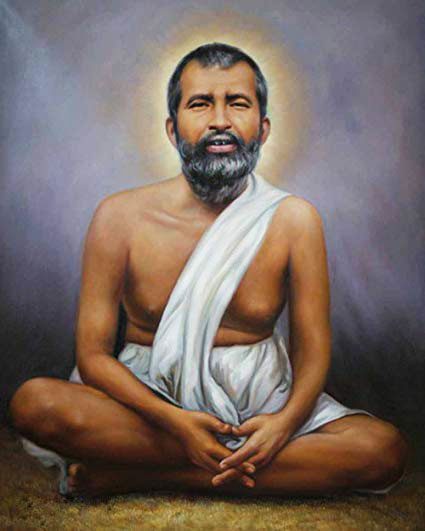
“Religion is realization, not mere talk.” In this succinct yet profound statement, Sri Ramakrishna invites us to move beyond the superficiality of religious discourse and into the depths of experiential understanding. The stakes are high; in a world often saturated with rhetoric and dogma, the essence of spirituality lies in the transformative experiences that shape our inner lives. This quote challenges us to consider the authenticity of our spiritual journeys and the ways in which we engage with the divine.
To grasp the weight of Ramakrishna's words, we must recognize that realization transcends intellectual assent or verbal expression. It is an invitation to embody the truths we seek, to allow our beliefs to manifest in our lived experiences. This call to action resonates deeply within the spiritual traditions, urging us to cultivate a direct relationship with the divine that is rooted in personal experience rather than mere theoretical understanding. In this light, Ramakrishna’s assertion becomes a clarion call for seekers to pursue a path of genuine engagement with their spirituality.
The image / the metaphor
At first glance, the quote presents a stark contrast between two modes of engagement with spirituality: realization and talk. The imagery of "realization" evokes a sense of depth, a profound awakening that is felt in the core of one’s being. In contrast, "mere talk" suggests a superficiality, a hollow echo of truth that lacks the substance of lived experience. The verbs chosen—“is” and “not”—create a definitive boundary, emphasizing that true religion cannot be confined to words alone; it must be lived, felt, and realized.
Diving deeper into the metaphor, we can see that realization implies an active process of awakening, akin to the blossoming of a flower that has been nurtured by the sun and rain. It suggests a journey of transformation, where the seeker sheds the layers of illusion and ignorance to uncover a deeper truth. This metaphor invites us to consider our own spiritual practices: Are we merely reciting prayers and doctrines, or are we engaging in a transformative process that leads to genuine understanding? The essence of Ramakrishna's teaching lies in this call to authenticity, urging us to seek the experiential heart of our beliefs.
In the speaker's tradition
Within the context of Hindu philosophy, Ramakrishna's assertion aligns closely with the concepts of dharma and bhakti. Dharma, or righteous living, emphasizes the importance of aligning one’s actions with spiritual principles, while bhakti, or devotion, calls for a heartfelt connection with the divine. Both concepts underscore the necessity of realization as an integral part of spiritual practice. In this light, Ramakrishna’s words resonate with the teachings of the Bhagavad Gita, where Krishna emphasizes the importance of action and devotion over mere knowledge.
Moreover, the notion of realization can be paralleled with the Buddhist concept of sunyata, or emptiness, which invites practitioners to transcend the dualities of existence and experience the interconnectedness of all life. Just as Ramakrishna urges us to move beyond talk, the teachings of sunyata encourage us to let go of conceptual frameworks and engage directly with the nature of reality. This shared emphasis on experiential understanding across traditions highlights the universal truth that genuine spirituality is rooted in realization rather than mere intellectual discourse.
Living the teaching
Consider a modern scenario where this teaching finds resonance: a group of friends gathers to discuss their beliefs about spirituality. They share insights, recite quotes, and engage in lively debate. However, amidst the conversation, one friend quietly reflects on her recent experience of meditation, where she felt a profound sense of peace and connection to something greater than herself. In this moment, the contrast between talk and realization becomes palpable; while the discussion is intellectually stimulating, it is the lived experience that holds the transformative power.
In a different context, imagine a couple navigating a difficult moment in their relationship. One partner may express frustration through words, articulating their feelings and desires. However, true understanding and healing occur when they move beyond mere talk and engage in empathetic listening, allowing each other’s experiences to be felt and understood. This shift from verbal expression to emotional realization embodies Ramakrishna’s teaching, illustrating how genuine connection and understanding can only arise from a place of deep engagement with one another’s realities.
A reflection
As we contemplate the essence of Ramakrishna's quote, we are invited to reflect on our own spiritual journeys. Are we engaging in mere talk, or are we actively seeking realization in our lives? In what ways can we deepen our understanding of spirituality through lived experience rather than intellectual discourse? This contemplative question encourages us to explore the depths of our beliefs and to seek the transformative experiences that lie at the heart of true spiritual practice.


