The Interplay of Goodness and Evil: A Contemplative Exploration
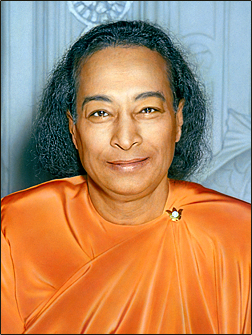
Paramahansa Yogananda's assertion that "Evil is, literally, a parasite feeding on the life of goodness. Remove goodness, and evil has no existence" invites us to reflect deeply on the nature of good and evil. In this perspective, evil is not an independent force but rather a dependent entity that thrives on the absence of goodness. This understanding compels us to examine the foundations of our moral and ethical lives, urging us to cultivate goodness as a means of diminishing the presence of evil in our world.
Yogananda's insight challenges us to reconsider our approach to both personal and societal struggles with evil. Rather than viewing evil as a formidable adversary to be vanquished, we are encouraged to focus on nurturing goodness within ourselves and our communities. This shift in perspective not only empowers us but also illuminates the interconnectedness of our actions and intentions, revealing how the cultivation of goodness can transform our experiences and the world around us.
The image / the metaphor
The metaphor of evil as a parasite evokes a vivid image of dependency and vulnerability. Just as a parasite relies on a host for sustenance, evil draws its strength from the absence or diminishment of goodness. The verbs "feeding" and "remove" emphasize an active engagement, suggesting that goodness is not merely a passive state but a vital force that must be nurtured and protected. This imagery invites us to visualize our moral landscape as a delicate ecosystem where the flourishing of goodness can repel the encroachment of evil.
Diving deeper into this metaphor, we can see that the relationship between good and evil is not merely adversarial but symbiotic. The existence of evil highlights the importance of goodness, much like darkness accentuates the brilliance of light. This interplay suggests that our understanding of morality is nuanced; it is not enough to simply fight against evil. Instead, we must actively cultivate goodness, recognizing that in doing so, we diminish the space in which evil can thrive.
In the speaker's tradition
Within the framework of Hindu philosophy, Yogananda's perspective resonates with concepts such as dharma and bhakti. Dharma, often translated as righteousness or duty, emphasizes the importance of living in accordance with moral principles that promote goodness. Bhakti, or devotion, further underscores the transformative power of love and goodness in our lives. By aligning ourselves with these principles, we not only elevate our own spiritual journey but also contribute to the collective well-being of humanity, thereby reducing the influence of evil.
In the Bhagavad Gita, a foundational text in Hinduism, the struggle between good and evil is depicted through the lens of duty and righteousness. Arjuna's moral dilemma on the battlefield serves as a poignant reminder of the importance of choosing goodness in the face of adversity. The Gita teaches that by adhering to one's dharma and cultivating a heart full of devotion, one can transcend the dualities of good and evil, ultimately realizing the unity of all existence.
Living the teaching
Consider a modern scenario where this teaching manifests: a workplace environment fraught with competition and negativity. In such a setting, one might encounter colleagues who engage in gossip or undermine each other. By consciously choosing to embody goodness—through acts of kindness, support, and integrity—one can create a ripple effect that transforms the atmosphere. This proactive approach not only diminishes the presence of negativity but also fosters a culture of collaboration and mutual respect.
In personal relationships, the application of Yogananda's teaching can be equally profound. Imagine a conflict with a loved one, where misunderstandings and hurt feelings have created a rift. By focusing on the goodness inherent in the relationship—through empathy, forgiveness, and open communication—one can begin to heal the wounds and restore harmony. This practice of nurturing goodness not only resolves the immediate conflict but also strengthens the bond, illustrating how the cultivation of goodness can dispel the shadows of discord.
A reflection
As we contemplate Yogananda's assertion, we are invited to reflect on our own lives: In what ways can we actively cultivate goodness to diminish the presence of evil? This question encourages us to examine our thoughts, actions, and intentions, prompting a deeper inquiry into how we can contribute positively to our surroundings. By embracing this contemplative practice, we not only enrich our own spiritual journey but also participate in the collective effort to foster a world where goodness prevails.


