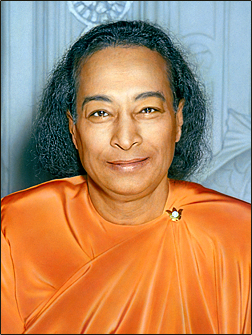
The Divine Partnership of Will and Accomplishment
Paramahansa Yogananda's assertion that "God will not tell you what you should want; but whatever you make up your mind to do, He will help you to accomplish it" invites us to explore the intricate relationship between divine guidance and human agency. In essence, Yogananda emphasizes that while the divine does not impose desires upon us, it stands ready to support our determined pursuits. This perspective not only highlights the importance of personal willpower but also suggests a profound partnership between the seeker and the divine, where intention and effort are met with grace and assistance.
This teaching resonates deeply within the spiritual landscape, where the interplay of desire, intention, and divine support shapes our journey. It encourages us to take ownership of our aspirations, reminding us that the path to fulfillment is not solely a matter of passive waiting for divine intervention. Instead, it calls for an active engagement with our own desires, urging us to clarify what we truly seek and to pursue it with steadfast determination. In this light, the quote serves as both a challenge and an invitation, urging us to step into our power while remaining open to the divine flow that can guide our efforts.
The image / the metaphor
The imagery in Yogananda's quote is rich and evocative, suggesting a dynamic interplay between human will and divine assistance. The phrase "God will not tell you what you should want" evokes a sense of autonomy, emphasizing that the responsibility for desire lies within us. This notion of self-determination is further reinforced by the verbs "make up your mind" and "help you to accomplish," which imply action and collaboration. The felt sense of this quote is one of empowerment; it encourages us to take the reins of our lives while assuring us that we are not alone in our endeavors.
In the speaker's tradition
Within the context of Yogananda's teachings, this quote resonates with several key concepts in Hindu philosophy, particularly the idea of dharma, or one's rightful path. Dharma emphasizes the importance of individual responsibility in pursuing one's life purpose, aligning closely with Yogananda's assertion that we must determine our own desires. Additionally, the concept of bhakti, or devotion, suggests that as we pursue our intentions with sincerity and dedication, we cultivate a deeper connection with the divine, which in turn supports our endeavors. This interplay of will and divine grace is a hallmark of Yogananda's spiritual framework.
Moreover, Yogananda's teachings often draw upon the wisdom found in the Bhagavad Gita, where the dialogue between Arjuna and Krishna illustrates the importance of self-determination in the face of uncertainty. Krishna encourages Arjuna to act according to his dharma, reinforcing the idea that divine guidance is most potent when we are actively engaged in our pursuits. This sacred text serves as a reminder that while the divine may not dictate our desires, it provides the wisdom and strength necessary to fulfill our chosen paths.
Living the teaching
Consider a modern scenario where this teaching can be applied: an individual contemplating a career change. Faced with uncertainty and fear of the unknown, they might hesitate to pursue their passion for art, feeling that they lack the divine approval to make such a leap. However, by embracing Yogananda's teaching, they can recognize that the desire to create is valid and worthy of pursuit. As they make the decision to follow their passion, they may find that opportunities arise, support surfaces from unexpected places, and their artistic journey unfolds with a sense of divine assistance.
Another application of this teaching can be found in the realm of relationships. Imagine someone navigating a challenging friendship, feeling the weight of unresolved conflicts. By taking the initiative to communicate openly and honestly, they embody the essence of Yogananda's message. As they express their intentions and desires for a healthier connection, they may discover that their vulnerability invites a deeper understanding and healing. In this way, the act of making up one's mind to engage authentically can lead to transformative outcomes, illustrating the power of will in partnership with divine grace.
A reflection
As we contemplate Yogananda's profound insight, we are invited to reflect on our own lives: What desires have we hesitated to pursue, believing them to be unworthy or unsupported? In recognizing that the divine does not dictate our wants but rather empowers our choices, we can begin to clarify our intentions and take steps toward their realization. This contemplation invites us to embrace our autonomy while remaining open to the divine assistance that can guide us along our chosen paths.


