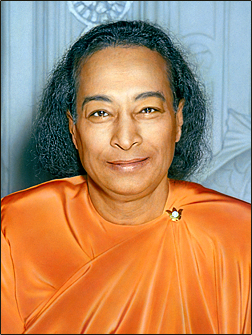
The Heart's Sanctuary: Finding Peace Within
Paramahansa Yogananda's assertion, "If in your heart you can find peace, you will find peace everywhere," invites us to explore the profound connection between inner tranquility and our external experiences. This statement emphasizes that the essence of peace is not contingent upon external circumstances but is rooted deeply within our own hearts. The stakes are high; in a world often fraught with chaos and uncertainty, the ability to cultivate inner peace can transform not only our personal lives but also the environments we inhabit.
Yogananda's words resonate with a timeless truth: the journey toward peace begins within. This notion challenges the common belief that peace is something to be sought externally, through achievements, possessions, or relationships. Instead, it calls us to turn inward, to cultivate a heart that is serene and grounded. By doing so, we can navigate the complexities of life with grace and resilience, ultimately radiating that peace outward to influence the world around us.
The image / the metaphor
The imagery in Yogananda's quote evokes a sense of sanctuary, suggesting that the heart is a sacred space where peace can be nurtured. The verbs "find" and "can" imply an active engagement; peace is not merely a passive state but a discovery that requires intention and effort. The heart, often associated with emotions and feelings, serves as the vessel through which we can access this profound sense of calm, regardless of the tumult that may surround us.
In the speaker's tradition
Paramahansa Yogananda's teachings are deeply rooted in the spiritual traditions of Hinduism, particularly the concepts of dharma and bhakti. Dharma, or the path of righteousness, emphasizes living in harmony with one's true nature, while bhakti, the path of devotion, encourages surrendering to a higher power. Both concepts underscore the importance of inner peace as a foundation for living a life aligned with spiritual principles. In this context, Yogananda's message becomes a call to embody these values, suggesting that true peace arises when we align our hearts with our higher purpose.
Moreover, Yogananda's teachings resonate with the idea of sunyata, or emptiness, found in Buddhist philosophy, which posits that true peace comes from letting go of attachments and desires. This aligns with the notion of kenosis in Christian mysticism, where self-emptying leads to divine union. By recognizing the interconnectedness of these traditions, we can appreciate that the quest for inner peace is a universal journey, transcending cultural and religious boundaries. Yogananda's emphasis on the heart as the source of peace invites us to explore these rich spiritual landscapes.
Living the teaching
Consider a modern scenario where this teaching can be applied: imagine a busy professional navigating the stress of deadlines and workplace dynamics. In such a situation, the external environment may feel chaotic and overwhelming. However, by turning inward and cultivating a sense of peace within the heart—perhaps through meditation or mindful breathing—the individual can create a sanctuary of calm. This inner peace not only alleviates personal stress but also positively influences interactions with colleagues, fostering a more harmonious workplace.
In a different context, think about a challenging relationship, where misunderstandings and conflicts seem to dominate interactions. By embodying Yogananda's teaching, one can approach the relationship with a heart centered in peace, choosing to respond with compassion rather than reacting with frustration. This shift in perspective can transform the dynamics of the relationship, allowing for deeper understanding and connection. In both scenarios, the heart's peace becomes a powerful catalyst for change, illustrating the profound impact of Yogananda's wisdom on our daily lives.
A reflection
As we contemplate Yogananda's profound insight, we are invited to reflect on our own hearts. What practices can we engage in to cultivate a deeper sense of peace within ourselves? In a world that often feels chaotic, how can we become beacons of peace, radiating tranquility to those around us? This inquiry encourages us to explore the depths of our own hearts, seeking the sanctuary that Yogananda so beautifully describes.


