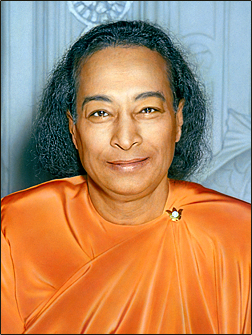
The Integrity of Action: A Path to Clarity
Paramahansa Yogananda's assertion that we should "never do anything that taints your mind" invites us to consider the profound impact of our actions on our mental and spiritual well-being. He warns that wrong actions generate negative vibrations that permeate our entire being, affecting not only our inner state but also our outward appearance and personality. This insight is crucial in a world where the consequences of our choices extend far beyond the immediate moment, shaping the very essence of who we are and how we relate to others.
In a society often driven by external validation and fleeting desires, Yogananda's words serve as a reminder to cultivate integrity in our actions. The notion that our mental state can be influenced by our choices emphasizes the interconnectedness of mind, body, and spirit. By aligning our actions with higher principles, we not only preserve our mental clarity but also contribute positively to the collective consciousness, fostering a more harmonious existence for ourselves and those around us.
The image / the metaphor
The imagery in Yogananda's quote evokes a vivid landscape of the mind, where actions are not merely isolated events but rather ripples in a vast ocean of consciousness. The verbs "taints" and "cause" suggest a dynamic interplay between our choices and their repercussions. To taint implies a corruption, a blemishing of purity, while to cause indicates an active role in shaping our mental environment. This metaphorical framework encourages us to visualize our thoughts and actions as seeds planted in the fertile soil of our minds, which will eventually bear fruit in our lives.
In the speaker's tradition
Yogananda's teachings are deeply rooted in the rich tapestry of Hindu philosophy, where concepts such as dharma and karma play pivotal roles. Dharma, often translated as righteousness or duty, underscores the importance of aligning our actions with our higher purpose. When we act in accordance with our dharma, we cultivate a sense of integrity that resonates positively within us and in the world around us. This alignment fosters a state of mental clarity and peace, allowing us to navigate life's challenges with grace.
Moreover, the idea of mental vibrations can be likened to the concept of prajna, or wisdom, which emphasizes the clarity of mind that arises from right action. In the Bhagavad Gita, Krishna advises Arjuna to act without attachment to the fruits of his actions, highlighting the importance of intention and purity in our endeavors. This ancient text echoes Yogananda's sentiment, reminding us that our actions, when rooted in wisdom and integrity, can lead to a more profound understanding of ourselves and our place in the universe.
Living the teaching
Consider a modern scenario where the application of Yogananda's teaching becomes evident: a workplace environment rife with competition and ambition. In such a setting, one might be tempted to engage in unethical practices to get ahead, believing that the end justifies the means. However, if one chooses to act with integrity, even in the face of pressure, the mental clarity and peace that ensue can transform not only personal experiences but also the culture of the workplace itself. By refusing to taint the mind with negative actions, individuals can create a ripple effect of positivity and ethical behavior.
In the realm of personal relationships, the implications of Yogananda's wisdom are equally profound. Imagine a moment of conflict with a loved one, where the temptation to react with anger or resentment looms large. By consciously choosing to respond with compassion and understanding, one can prevent the tainting of the mind and foster a deeper connection. This practice of mindful engagement not only preserves one's mental state but also nurtures the relationship, allowing it to flourish in an atmosphere of love and respect.
A reflection
As we contemplate Yogananda's profound insight, we are invited to reflect on the integrity of our own actions. What choices are we making that may taint our minds, and how do these choices manifest in our lives? In moments of decision, let us ask ourselves: Are we acting in alignment with our highest values, or are we succumbing to the pressures of the moment? This question serves as a guiding light, illuminating the path toward a life of clarity, purpose, and authentic connection.


