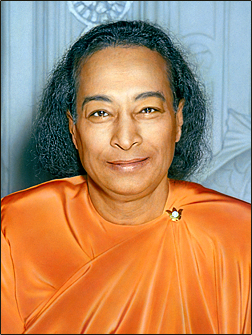
The Love That Underlies Existence
Paramahansa Yogananda's assertion that "real love is behind all of creation" invites us to explore the profound interconnectedness of all beings and events. He suggests that love is not merely an emotion but the very fabric of reality itself, woven into the essence of every person, appearance, and occurrence. This perspective challenges us to reconsider our understanding of existence, urging us to see beyond the surface and recognize the underlying love that permeates our lives. In a world often marked by division and conflict, this insight holds the potential to transform our relationships and our approach to life.
Delving deeper, Yogananda's words compel us to reflect on the nature of love as a universal force. It is not limited to romantic or familial bonds but extends to all aspects of creation. By recognizing that love is the foundation of existence, we are encouraged to cultivate a mindset that seeks to uncover this love in every interaction and experience. This shift in perception can lead to a more compassionate and harmonious existence, where we acknowledge the divine essence in ourselves and others.
The image / the metaphor
The imagery in Yogananda's quote is rich and evocative, suggesting a world suffused with love. The phrase "behind every person is love" implies that beneath the complexities of human behavior lies a fundamental goodness and connection. The use of "behind every appearance" invites us to look beyond superficial judgments and societal constructs, urging us to see the deeper truth that unites us all. The verb "is" serves as a powerful affirmation of love's omnipresence, reinforcing the idea that love is not just an abstract concept but a tangible reality that shapes our lives.
As we delve deeper into the metaphor, we begin to understand that Yogananda is not merely speaking of love as an emotion but as a cosmic principle. This love is akin to the force that binds the universe together, much like gravity or electromagnetism. By framing love as the essence behind every event, he encourages us to perceive life as a series of interconnected moments, each infused with purpose and meaning. This perspective invites us to engage with the world more mindfully, recognizing that every encounter is an opportunity to experience and express love.
In the speaker's tradition
Yogananda's teachings are deeply rooted in the spiritual tradition of Hinduism, where love is often equated with the divine. Concepts such as bhakti, or devotional love, emphasize the importance of cultivating a loving relationship with the divine as a pathway to spiritual realization. In this context, love transcends personal attachment and becomes a means of experiencing unity with all beings. The idea of dharma, or one's duty, is also intertwined with love, as fulfilling our responsibilities with compassion and kindness reflects our understanding of love's role in the universe.
In the Bhagavad Gita, a foundational text in Hindu philosophy, love is portrayed as a divine force that guides individuals toward their higher selves. The Gita emphasizes the importance of selfless action, where love manifests through service to others. This aligns with Yogananda's assertion that love is the essence behind every event, suggesting that our actions, when rooted in love, contribute to the greater tapestry of creation. By embodying this principle, we not only honor our own spiritual journey but also uplift those around us.
Living the teaching
Consider a modern scenario where this teaching can be applied: a workplace conflict. Imagine two colleagues who are at odds over a project. By recognizing that behind their differing opinions lies a shared desire for success and collaboration, they can approach the situation with empathy. Instead of viewing each other as adversaries, they can choose to see the love for their work and their team that motivates their actions. This shift in perspective can lead to a resolution that honors both individuals and fosters a more harmonious work environment.
In the realm of personal relationships, Yogananda's teaching can be transformative during moments of tension. For instance, during a disagreement with a loved one, one might pause to reflect on the underlying love that exists between them. By acknowledging that their conflict stems from a place of care and concern, they can navigate the disagreement with greater compassion. This practice of seeking love in challenging moments not only strengthens relationships but also cultivates a deeper understanding of the interconnectedness of all beings.
A reflection
As we contemplate Yogananda's profound assertion that "real love is behind all of creation," we are invited to explore our own perceptions of love in our daily lives. How can we shift our focus from the surface-level appearances of conflict and division to the deeper love that unites us all? In what ways can we embody this love in our interactions, fostering a sense of connection and understanding in a world that often feels fragmented? Let these questions guide your reflections as you seek to live in alignment with the love that permeates existence.


