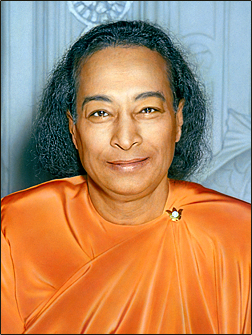
The Dance of Solitude and Service
Paramahansa Yogananda's assertion that "solitude is necessary to become established in the self, but masters then return to the world to serve" encapsulates a profound spiritual journey. In essence, he highlights the dual necessity of introspection and outward engagement. The journey inward allows for the cultivation of self-awareness and mastery, while the return to the world signifies a commitment to service and the interconnectedness of all beings. This interplay between solitude and service is not merely a personal endeavor; it is a universal call to action that resonates deeply within the human experience.
In a world increasingly defined by noise and distraction, Yogananda's words remind us of the importance of carving out time for solitude. This solitude is not an escape but a sacred space where one can confront the depths of the self, fostering growth and understanding. The mastery achieved in solitude equips individuals with the wisdom and compassion necessary to engage meaningfully with the world. Thus, the quote serves as a guiding principle for those seeking to navigate the complexities of life while remaining anchored in their true selves.
The image / the metaphor
The imagery in Yogananda's quote evokes a rich tapestry of solitude and service, suggesting a cyclical journey. The term "solitude" conjures a sense of retreat, a sacred pause where one can delve into the inner landscape of the self. The verbs "become established" and "return" imply a process of transformation; solitude is not a static state but a dynamic phase that leads to a deeper understanding of one's essence. The act of returning to the world to serve indicates a purposeful reintegration, where the insights gained in solitude are shared with others.
Diving deeper into the metaphor, solitude can be seen as a fertile ground for spiritual growth, akin to a seed that must be buried in the earth before it can sprout. This process of germination requires patience and nurturing, reflecting the inner work necessary to cultivate mastery. The return to the world symbolizes the blossoming of that seed, where the fruits of solitude—wisdom, compassion, and clarity—are offered to nourish the collective. In this way, solitude and service are not opposing forces but rather complementary aspects of a holistic spiritual journey.
In the speaker's tradition
Yogananda's teachings are deeply rooted in the Hindu tradition, where the concepts of dharma and self-realization play pivotal roles. Dharma, often translated as one's duty or righteous path, emphasizes the importance of aligning one's actions with a higher purpose. The journey into solitude aligns with the pursuit of self-realization, a key tenet in Hindu philosophy that encourages individuals to explore their true nature beyond societal roles and expectations. This exploration often leads to a state of kenosis, or self-emptying, where one sheds the ego to embrace a more expansive sense of self.
In the context of Yogananda's teachings, the notion of bhakti, or devotion, also emerges as a vital element. The mastery achieved in solitude fosters a deep sense of devotion that naturally compels individuals to serve others. This is echoed in the Bhagavad Gita, where Krishna advises Arjuna to fulfill his dharma as a warrior, emphasizing that true mastery is not merely for personal gain but for the upliftment of all beings. The interplay of solitude and service thus becomes a sacred dance, reflecting the interconnectedness of individual and collective spiritual evolution.
Living the teaching
Consider a modern scenario where an individual feels overwhelmed by the demands of work and family life. In such moments, the call to solitude becomes essential; it may manifest as a quiet retreat into nature or a dedicated time for meditation. This intentional solitude allows the individual to reconnect with their inner self, gaining clarity and strength. Upon returning to their daily responsibilities, they find themselves more present and compassionate, able to engage with their loved ones and colleagues from a place of groundedness and understanding.
Another application of this teaching can be found in the realm of relationships. During conflicts or misunderstandings, taking time for solitude can provide the necessary space to reflect on one's feelings and reactions. This pause allows for a deeper understanding of oneself and the dynamics at play, ultimately leading to more constructive communication. By embodying the mastery gained in solitude, individuals can approach their relationships with greater empathy and a commitment to serve the needs of others, fostering harmony and connection.
A reflection
As we contemplate Yogananda's profound insight, we are invited to reflect on our own lives: How can we cultivate a balance between solitude and service? In what ways can we carve out sacred time for introspection while remaining engaged with the world around us? This inquiry encourages us to explore the delicate interplay between our inner journeys and our outward expressions of love and compassion, guiding us toward a more integrated and fulfilling existence.


