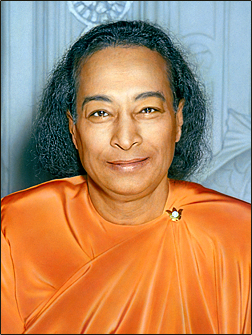
The Divine Dream: Understanding Creation Through Yogananda's Lens
Paramahansa Yogananda's profound assertion that "The whole cosmos is a materialized thought of the Creator. This heavy, earthly clod, floating in space, is a dream of God," invites us to reconsider our relationship with the universe and our place within it. In essence, Yogananda suggests that the cosmos is not merely a physical reality but a manifestation of divine consciousness. This perspective challenges us to see our existence as part of a larger, intentional creation, urging us to explore the implications of this interconnectedness.
Delving deeper, Yogananda's words evoke a sense of wonder and responsibility. If the cosmos is indeed a dream of God, then our lives are imbued with purpose and significance. This understanding can transform our daily experiences, prompting us to engage with the world around us in a more mindful and reverent manner. By recognizing the divine essence within all creation, we are encouraged to cultivate a sense of gratitude and stewardship for the earth and its myriad forms of life.
The image / the metaphor
The imagery in Yogananda's quote is rich and evocative, presenting the cosmos as a "materialized thought" of the Creator. This phrase suggests that the universe is not a random occurrence but rather a deliberate expression of divine intention. The choice of words like "heavy, earthly clod" juxtaposed with "floating in space" creates a striking contrast between the tangible and the ethereal, inviting us to ponder the dual nature of existence. It evokes a sense of both grounding and transcendence, reminding us that while we are rooted in the physical world, we are also part of a vast, interconnected cosmos.
Moreover, the metaphor of the cosmos as a dream of God invites contemplation on the nature of reality itself. Dreams are often seen as reflections of our inner thoughts and desires, suggesting that the universe may be a projection of divine consciousness. This perspective encourages us to question the solidity of our perceptions and to explore the deeper truths that lie beneath the surface of our everyday experiences. In this light, the cosmos becomes a canvas for divine creativity, inviting us to participate in the unfolding of existence.
In the speaker's tradition
Yogananda's insights are deeply rooted in the Hindu tradition, where the concepts of creation and consciousness are intricately intertwined. In Hindu philosophy, the idea of Brahman, the ultimate reality, encompasses both the material and the spiritual realms. This aligns with Yogananda's assertion that the cosmos is a manifestation of divine thought, reflecting the belief that all creation is imbued with the essence of the divine. The notion of dharma, or the moral order of the universe, further emphasizes our responsibility to live in harmony with this cosmic order, recognizing that our actions have far-reaching implications.
Additionally, Yogananda's perspective resonates with the teachings found in the Upanishads, ancient texts that explore the nature of reality and the self. For instance, the concept of "Tat Tvam Asi," meaning "That Thou Art," underscores the interconnectedness of all beings and the divine essence that permeates existence. This understanding invites us to see ourselves not as separate entities but as integral parts of a greater whole, echoing Yogananda's vision of the cosmos as a divine dream.
Living the teaching
In our modern lives, the teaching that the cosmos is a dream of God can manifest in various ways. Consider a moment when you find yourself overwhelmed by the chaos of daily life—perhaps during a hectic commute or while juggling multiple responsibilities. In such instances, pausing to reflect on the idea that this experience is part of a divine tapestry can shift your perspective. It encourages you to approach challenges with a sense of curiosity and openness, recognizing that even in difficulty, there is a greater purpose at play.
Furthermore, this teaching can profoundly impact our relationships. Imagine a conflict with a loved one, where misunderstandings and hurt feelings cloud your connection. By viewing the situation through the lens of Yogananda's insight, you may begin to see the divine essence in the other person, fostering empathy and compassion. This shift in perception allows for healing and reconciliation, reminding us that we are all part of the same cosmic dream, interconnected and deserving of love and understanding.
A reflection
As we contemplate Yogananda's assertion that the cosmos is a dream of God, we are invited to reflect on our own lives and experiences. How might viewing the world as a manifestation of divine thought change the way you engage with your surroundings? In what ways can you cultivate a deeper sense of connection to the cosmos and the people within it? Allow these questions to guide your contemplation, opening your heart to the possibility of seeing the divine in every moment.


