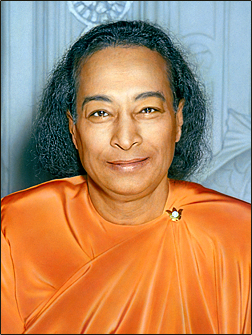
The Dance of Existence: Embracing Joy and Purpose
Paramahansa Yogananda's assertion that "You have come to earth to entertain and to be entertained" invites us to reconsider the essence of our earthly journey. This statement encapsulates a profound understanding of life as a playful dance, where joy and purpose intertwine. In a world often burdened by seriousness and obligation, Yogananda's words remind us that our existence is not merely a series of tasks to be completed but a vibrant expression of creativity and connection.
At its core, this quote challenges the conventional narratives surrounding purpose and fulfillment. It suggests that life is not solely about striving for achievements or adhering to societal expectations; rather, it is about engaging in a joyful interplay with the world. This perspective encourages us to embrace our roles as both participants and observers in the grand theater of existence, where every moment can be infused with delight and meaning.
The image / the metaphor
The imagery in Yogananda's quote evokes a sense of playfulness and lightness. The verbs "entertain" and "be entertained" suggest a dynamic exchange, a mutual engagement that transcends the mundane. This dance of existence implies that our lives are not isolated experiences but rather interconnected performances where each individual contributes to the collective joy of being. The felt sense of this metaphor is one of liberation; it invites us to shed the weight of seriousness and embrace the spontaneity of life.
Diving deeper into the metaphor, we can see that entertainment is not merely about superficial amusement but rather a profound engagement with the essence of life itself. To entertain is to bring forth creativity, to express oneself authentically, and to share that expression with others. In this light, the act of being entertained becomes a reciprocal experience, where we find joy in the creativity of others and allow ourselves to be moved and inspired. This interplay fosters a sense of community and connection, reminding us that we are all part of a larger narrative.
In the speaker's tradition
Within the context of Yogananda's teachings, this notion of entertainment aligns closely with the concept of dharma, or one's rightful duty. In Hindu philosophy, dharma encompasses not only responsibilities but also the pursuit of joy and fulfillment in one's life. By engaging in activities that bring us joy, we align ourselves with our true purpose, contributing to the greater harmony of the universe. This perspective resonates with the idea of bhakti, or devotion, where the act of engaging with life becomes a form of worship, a celebration of the divine presence in all things.
Moreover, Yogananda's emphasis on joy as a central aspect of existence can be found in the Bhagavad Gita, where Krishna encourages Arjuna to embrace his path with enthusiasm and love. The Gita teaches that life is a sacred dance, and by participating fully in it, we honor our true selves and the divine. This connection between joy and purpose is a recurring theme in Yogananda's work, reminding us that our earthly journey is a divine play, where every moment holds the potential for joy and fulfillment.
Living the teaching
Consider a modern scenario where this teaching resonates: a workplace filled with stress and competition. In such an environment, individuals often lose sight of their original intentions and the joy that brought them to their roles. By embracing Yogananda's perspective, one might approach their work as an opportunity to entertain and be entertained, fostering creativity and collaboration rather than competition. This shift in mindset can transform the workplace into a space of shared joy, where each person's contributions are celebrated and valued.
A reflection
As we contemplate Yogananda's invitation to entertain and be entertained, we are called to reflect on our own lives. Are we engaging fully in the dance of existence, or have we become entangled in the seriousness of our responsibilities? In what ways can we infuse our daily experiences with joy and creativity, allowing ourselves to be both participants and observers in the grand performance of life? Let this question guide your contemplation as you navigate the intricate tapestry of your own journey.


